|
AppleInsider: Reviews
|
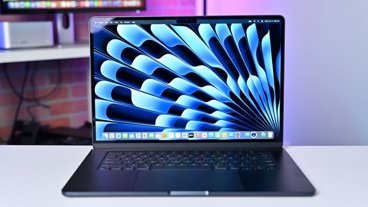
 Every product involves a series of engineering decisions. The Air trades off some high end features of the MacBook Pro to slim down in size and weight, and trades off the economy of the MacBook in order to deliver a desirable punch that matches its razor thin outline. In our review, we'll look at three major categories of Apple's engineering decisions that resulted in the Air: mobility, performance, and overall design.
[Discuss]
 Amazon's new Kindle ebook reader is billed as the iPod for digital reading. Will it inspire a new era of mainstream electronic reading, just service a dedicated niche of hard core readers, or simply fizzle out into failure? We put the new device through its paces to find out.
[Discuss]
 This year, Apple gave the iPhone and the new Classic, Touch, and Nano models improved TV out features while harmonizing the AV cables used by its entire product line. Here's a look at what's changed, a review of Apple's recently released AV Cable kits, why the invented controversy about Apple's new cables is simply misinformed, and how using an iPod for video output compares against Apple TV.
[Discuss]
 In addition to the ultra-thin aluminum keyboard Apple unveiled for the iMac last month, a similarly proportioned Bluetooth wireless version was also introduced. Here's a setup and unpacking tour, paired with a look at its features, an operational mystery, and a tantalizing future potential.
[Discuss]
 The iPod Touch delivers an advanced new generation of the iPod using technology developed for the iPhone. However, it's not an "iPhone without the phone," and that reality is likely to upset lots of users who want it to be. For everyone else, the new Touch is an amazingly thin and sexy new media playing, web browsing, photo viewing, widescreen, multi-touch member of the iPod family that simply changes the game in handheld media players.
[Discuss]
 Released alongside the all new third generation iPod Nano, the new iPod Classic offers a refined all-metal case, the same new graphical interface of the Nano, and the most battery and storage capacity of any iPod model (thanks to its hard drive and hefty battery). However, as outlined in this review, the Classic may signal the end of the road for hard disc drive-based iPods, as Apple aggressively moves its entire media player lineup to Flash memory storage. [Discuss]
 The new third generation Nano has the same small and ultra thin form factor as previous Nanos and similarly occupies the same sports-centric product position in the Apple's iPod line. However, it adds full video iPod features on a screen smaller than the existing 5G video iPod. How well does it deliver?
[Discuss]
 XtremeMac's four port HDMI switcher is designed with the Apple TV in mind, but works with any game consoles, cable and satellite set top boxes, DVD and HD disc players, and other equipment supporting the High Definition Multimedia Interface port. XtremeMac's switch is well built and value priced.
[Discuss]
 In this second installment of our iPhone Review Series, we compare the Apple iPhone to the Palm Treo 650 from the perspective of a former Treo 650 user, providing a look at how the two platforms compare, what the iPhone offers for current Treo users, and a few things it doesn't yet do.
[Discuss]
 The mid-2007 overhaul of Apple's iconic desktop is the first true evidence of a switch in Apple's design direction since the company's switch to Intel processors. But while it represents two steps forward in terms of ergonomics and performance, pro users may find the iMac taking one step backward.
[Discuss]
 Apple's first accessory for the iPhone is its minimalist Bluetooth headset. It's light, simple, and attractively designed, but also lacks features of comparably priced devices and fails to deliver the full potential of the iPhone. The headset costs $129, which is near the high end of comparable headsets. It also includes an iPhone dual dock that charges both the headset and the iPhone, and a separate USB docking cable that can be used to charge both from a single USB when traveling.
[Discuss]
 Conceived as the the one phone to rule them all, Apple's iPhone represents one of the most valiant first-time efforts in the history of the mobile handset market. And while it may not trump all existing handsets with utmost precision, the iPhone presents itself as a serious contender to nearly all traditional handsets and some high-end smartphones. In this first installment of our iPhone Review Series, we compare the new Apple handset to the BlackBerry 8703e, weighing whether it is compelling enough to sway prospective buyers and fence sitters.
[Discuss]
 While the iPhone is primarily marketed as a mobile phone, it's also the latest generation of iPod, a handheld computer with a web browser, an organizer, a note taker and a camera. Are all of its features worth its $500-600 price, particularly in view of criticisms lodged against AT&T's service and the missing features in the device itself?
[Discuss]
 Apple TV offers a way for consumers to unlock the videos, music, and photos on their computer for use in the living room on TV. The new device competes against a series of other products, including the least expensive option of simply running a long video cable from the computer to the television. Whether Apple TV is worth the price will depend a lot upon on how much users like iTunes already, and how they plan to make use of the Apple TV.
[Discuss]
 Apple's revised AirPort Extreme, introduced at Macworld Expo in January, offers several new features and significant improvements in wireless networking speed and reliability. Whether it is worth the upgrade price to move on up to the new 802.11n wireless technology depends upon the specific needs of potential buyers. Read all about it in our 4-page in-depth review.
 Want to watch DVDs on Apple TV? On May 8th, Roxio will introduce a new application called Crunch designed specifically to convert a variety of different video formats for use with iPods, Apple TV, and the soon to be released iPhone. Check out how Crunch stacks up against the existing video conversion alternatives in our exclusive 3-page review.
 Apple surprised more than a few industry pundits when it snuck out a rainbow of iPod shuffle colors at the end of January. Ever since it first hit the streets in 2005, the shuffle has been seen as the runt of the litter in Apple's music player line, a cynical ploy to make the more expensive models look that much better. It was a not-so-subtle suggestion that you should have studied more in college. But the launch of its metallic second incarnation, and especially its multi-flavored update early this year, has changed all that.
 I hadn't planned on buying a new desktop computer until the fall, but Apple's iMac update caught me off guard. Suddenly, Apple was selling a computer that seemed to offer the right balance of performance and value to meet the needs of the average "prosumer." By today's standards, I'm not a particularly demanding user. I don't edit videos in Final Cut Pro; I don't even use iMovie. I like the occasional game, but primarily I use my computer for Internet-based work. The applications that run constantly on my machine are Safari, Mail, Adium X, iTunes, NetNewsWire, Photoshop, Transmit, and TextEdit.
 So we've been toying with Apple's new Mighty Mouse for about a day now. Being on the east coast this Tuesday, we were lucky enough to be one of the first to grab one of these puppies, long before Apple's retail stores opened in California. Each Mighty Mouse comes packaged in a square black and white box, which flips open like the cardboard housing of a New York style cheesecake. Compared to the AirPort Express or iPod, the Mighty Mouse packaging materials are far less enchanting.
|
|
|
|
|