Intel, Google announce mobile partnership for Atom Android smartphones
 Daniel Eran Dilger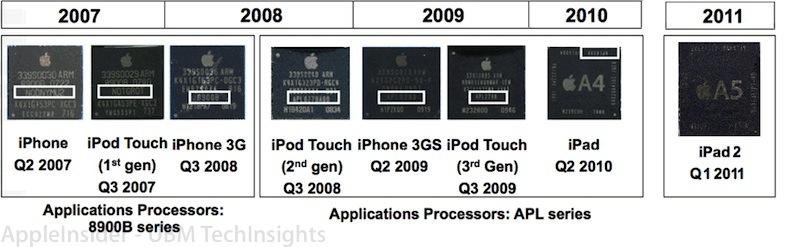
According to a report by Reuters, the two companies "will work together to optimize future versions of Google's Android mobile software for Intel's Atom processors, hoping to speed the development and time-to-market of future Intel-powered smartphones."
The vast majority of smartphones, not to mention tablets and other mobile devices, use processors based on the ARM architecture and built by companies including Texas Instruments and Samsung.
Intel's troubled history of pushing Atom
Intel launched its Moblin (Mobile Linux) initiative in 2007 aimed at putting its Atom chips in netbooks running Linux. Microsoft then pushed its PC partners to use Windows XP rather than Linux for netbooks, a win for Intel because Microsoft's Windows platform only runs on x86 processors like Intel's Atom and not ARM. However, netbooks as a PC segment have since seen market growth collapse.
Intel has not been happy with Microsoft's efforts to support Atom however, complaining early last year that "Microsoft hasn't been quite as aggressive as we might have hoped at supporting Atom, especially in the embedded space and that's why we came up with our platform Moblin," in the words of Intel's James Reinders.
At the time, Intel had just announced a partnership to merge Moblin with Nokia's Maemo, resulting in a project called MeeGo. Reinders told Tech Radar at that time that "the progress of Windows 7 still limited - it doesn't go all the places we think Atom will go," and suggested that Android and iOS weren't as powerful as Intel wanted to see either. "We feel people want an operating system that is more powerful on these devices. Pushing Moblin is definitely about getting more choice it that space."
Intel demonstrated an Atom-based MeeGo tablet prototype concept last summer, and Nokia ultimately shipped two MeeGo devices, the N900 Internet Tablet (similar to an iPod touch, with smartphone calling features), and the N9 smartphone. Early this year however, Nokia disbanded its MeeGo team, limited release of the new N9, and announced a partnership with Microsoft to focus on Windows Phone 7 devices. Currently, Microsoft's latest smartphone platform exclusively targets ARM chips.
With Apple, Microsoft, Nokia and RIM all committed to ARM, Intel has limited options for pushing Atom on mobile devices; Android appears to be the only viable platform remaining to target. Intel hasn't announced any vendors that will actually use its Atom chips to power Android-based smartphones, but it hopes that Atom based smartphones could reach the market by early next year.
Partnering with Google gives Intel the credibility to suggest that Atom chips are plausible components for smartphone makers. Google itself expects to soon own Motorola Mobility, giving it the power to release new versions of Android exclusively on its own Atom hardware with a first to market advantage, if Intel were actually able to deliver a hardware advantage to using its Atom chips in mobile devices.
Apple picks ARM over Atom
Apple was a cofounder of the original ARM mobile architecture in the early 90s, and used early versions in its Newton MessagePads. It then returned to ARM chips in building the iPod in 2001. In an early design phase of the iPad, however, Apple examined Intel's new Atom line, then called Silverthorne.
The primary benefit of Intel's Atom chips is backward compatibility with its desktop line of x86 processors, like those used in both Apple's Macs and in Windows PCs. Apple's Mac OS X was designed to be largely processor agnostic however, enabling the company to deliver an ARM version of its OS for mobile devices under the brand iOS.
Apple ultimately decided that Atom wasn't efficient enough to run the iPad, and instead developed its own new ARM chip design it branded A4. That chip was also used to power iPhone 4. Apple subsequently developed an A5 successor for use in iPad 2, and is rumored to be evaluating ARM processor designs for use in future highly mobile Macs, where efficiency may be more valuable than performance.
While Apple aggressively moved its Mac platform to Intel in 2006 and has since demonstrated unique applications of Intel chips in systems ranging from the Mac Pro to the Mac mini to the MacBook Air, Intel has worked to find alternative hardware vendors capable of building everything from mini PCs to "ultralight" notebooks to the Atom-based tablet Apple opted not to build.
Apple actively removed support for Atom processors in Mac OS X 10.6.2, making its operating system software unable to work on other makers' Atom-based netbooks. Last year, Apple also shifted its Apple TV product from a low powered Intel chip to ARM in order to help make the device smaller, cheaper and run cooler.
Microsoft has also announced efforts to make portions of its Windows 8 run on ARM chips sometime next year, enabling its software to run on more efficient hardware than Intel can currently deliver.
This summer, a report indicated Intel was interested in building future Apple-designed ARM chips, which may allow Apple to transition its CPU fabrication business away from Samsung.
At the same time, Intel's chief executive Paul Otellini told reporters after the announcement that "the smartphone business is not established in terms of the ultimate shake-out of who's going to win and who is going to lose.
"You saw what happened in terms of how fast Android took share from Apple," he said, suggesting that Apple had lost market share to Android in smartphones, something that is not the case.



 Mike Wuerthele
 Malcolm Owen
 Chip Loder
 William Gallagher
 Christine McKee
 Michael Stroup

48 Comments
Intel will have a tough time getting hardware manufacturers to switch to a chip architecture that everyone knows is inferior to ARM.
Watch your back.
Signed, Apple
Apple can no longer rely on a company like Intel for strategic materials.
Apple should go ahead and buy AMD. That way they control their own destiny, and won't get stabbed in the back.
The intel chips in question are the new medfield chips which are low power and can run at up to 1.5ghz in smartphones. They are 32nm process SoC, significantly smaller than the moorstown atom chips and on a par with ARM for power consumption both in idle and under load.
The true benefit is more for windows tablets as they are x86 compliant and will run existing windows applications where as the applications will need to be recompiled/rewritten for windows ARM tablets.
Interesting times ahead and it will keep arm and intel on their toes which is good for the consumer.
Intel will have a tough time getting people to switch to a chip that everyone knows is inferior to ARM.
An overwhelming majority of customers don't know or care which chipset are inside their hardware. Features and easy of use is what most people care about in purchasing hardware.
Honestly, I would love to see some serious competition to ARM chips. Intel was slacking off in the CPU department for a while until AMD gave them a run for their money. Now look at Intel -- back on the saddle and ensuring that they stay ahead of AMD.