Microsoft Pink-Zune details emerge alongside Windows Phone 7
 Daniel Eran Dilger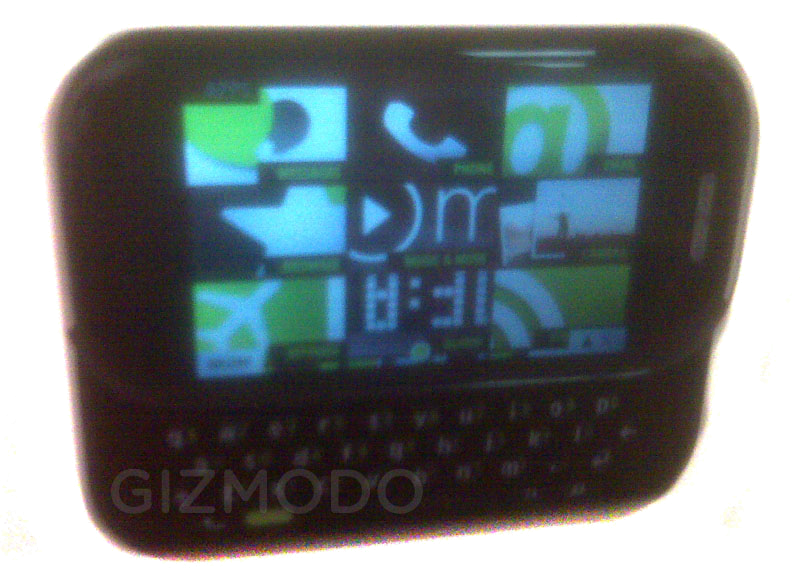
New but blurry pictures of the Pink phones, rumored to be built by Sharp (the maker of Danger's Sidekick), have leaked on Gizmodo. A report from Reuters indicates that Microsoft will be launching Pink under its own brand name on Verizon Wireless later this year, much as Google recently launched the HTC-built Nexus One under its own brand with T-Mobile.
Speaking at the January Consumer Electronics Show in Las Vegas, Microsoft's Robbie Bach, who runs the company's struggling Entertainment & Devices Division, just finished seeding fears regarding Google's first party Nexus One branding while the search giant also tries to operate Android as a third party platform with its hardware partners.
“Doing both in the way they are trying to do both is actually very, very difficult,†Bach said. “Google’s announcement sends a signal where they’re going to place their commitment. That will create some opportunities for us and we’ll pursue them."
Just two months later, Microsoft now appears to be following the very same strategy, launching Pink as its smartphone version of the Zune while also hoping to maintain its existing third-party smartphone platform with existing Windows Mobile licensees. As with the Zune however, it appears that Microsoft will attempt to partition Pink away from its Windows Phone platform, apparently even keeping them incompatible with each other's software, despite using the same Windows CE 7 operating system kernel.
Microsoft's drama within
Rivalry between the Pink and Windows Mobile groups within Microsoft was reportedly well underway last fall, although the full details only really leaked publicly once Microsoft's Danger subsidiary experienced its embarrassing cloud computing crisis while shifting its focus away from servicing its existing T-Mobile Sidekick subscribers and toward a future Pink deal with Verizon.
That data loss disaster dragged on for nearly a month before Sun and Oracle experts helped to recovered portions of Microsoft's improperly backed up data store of contacts, calendars, todos, photos and other information.
At the time, the problem appeared to be the last straw for Microsoft's Pink Project within the Premium Mobile Experiences group headed by Roz Ho. Pink was charged with reinventing the failed Windows Mobile 6 in a form that could compete with the iPhone, and was intended to do so independently from the team working on Windows Mobile 7 in parallel.
Last October, Greg Kumparak of MobileCrunch cited an anonymous source "with a seemingly exhaustive knowledge of Microsoft’s Project Pink" as describing the project as being in disarray, with "no braintrust that understands how to build a product."
Efforts to build a third party software platform and App Store for Pink were also in trouble, the tipster said, because "team members don’t know how to get it done," adding that remaining employees were complaining that they "hate the product" they were working on and felt like it was "never intended to ship," but that it only existed to "challenge [the Windows Mobile 7 team] and upset them into competing."
Microsoft Windows Phone 7 vs Microsoft Pink
Microsoft recently relaunched the future of Windows Mobile under the name "Windows Phone 7," which it hopes to ship as a product by the end of the year. After giving Apple a two year head start in establishing its wildly popular iTunes App Store for the iPhone, Microsoft is now in the position of Palm's struggling WebOS platform: attempting to start from scratch against Apple's mobile software platform with 140,000 apps, and installed base of more than 75 million devices, and an enthusiastic, profitable ecosystem of third party developers.
Similar to Palm, Microsoft has taken the route of deemphasizing mobile apps to instead focus on an experience that blurs together just the most popular web-centric features like Facebook and Twitter, while also directing attention toward Microsoft's own Bing search and Zune media player properties.

This is an interesting departure from the company's historic focus on "developers, developers, developers," because in the mobile business, Microsoft will be rendering its entire existing library of Windows Mobile apps obsolete, along with their stylus-centric user interface and Windows-branded conventions such as the Start Menu.
Microsoft hopes its developers will start over from scratch using its more modern .NET and XNA development tools, a strategy that hasn't worked so far on the Zune HD, which offers the same third party development environment but isn't gaining any real traction with developers because the hardware isn't selling in enough volume to create a viable software market. Not even Microsoft is creating significant software for the Zune HD.
Microsoft: if we can't create a viable market, mobile apps just don't matter
Microsoft's new Windows Phone 7 initiative also signals the death of its existing Windows Mobile Marketplace, which the company scrambled to assemble and deploy last year in order to have something to compete with Apple's iPhone App Store.
Microsoft began charging developers $99 to list each of their existing Windows Mobile apps in the new store, but plummeting sales of Windows Mobile phones aborted any prospects for the desolate mobile software marketplace. Last fall, Microsoft’s chief software architect Ray Ozzie claimed that smartphone platforms and their number of available mobile apps don't really matter because "all the apps that count will be ported to every one of them." But even well-heeled app developers like Google have announced "we're not rich enough to support RIM" and every other proprietary smartphone platform available.
At the same time, customers apparently see mobile apps as being very valuable, particularly the games and other utilities that Apple is touting in its iPhone and iPod touch commercials. Apple is also highlighting its iPhone OS software platform as a key element of the company's iPad strategy, along with the new iBook Store. Developers have rushed to cash in on the opportunity afforded them by iTunes' App Store, which is unrivaled by any other smartphone or mobile device platform.
The collapse of its Windows Mobile Marketplace has now caused Microsoft to radically reword its mobile app strategy going forward in such a way as to vilify the entire concept of apps. At the launch of Windows Phone 7, the company presented a video that portrayed the iPhone's ability to run mobile apps as a confusing world with too many doors to choose from, each leading to rooms with starkly white walls, an experience that frustrated and puzzled a professionally dressed woman.
That idea is particularly ironic given the company's adamant presentation that choice was paramount when choosing a PlaysForSure media player or music store, or when touting the applications available on Windows PCs, or when shopping for a smartphone among the licensees of its now defunct Windows Mobile platform.



 Malcolm Owen
 William Gallagher and Mike Wuerthele
 Christine McKee
 William Gallagher

 Marko Zivkovic