Bluetooth 3.0 arrives with promise of eightfold speed increase
 Katie Marsal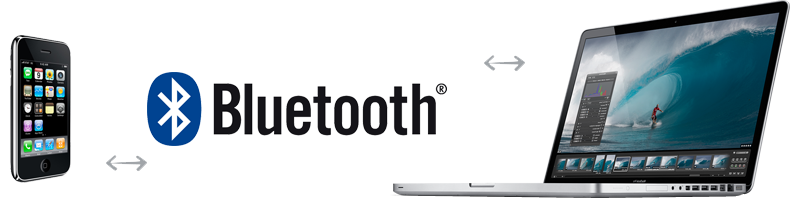
Presenting at its annual All Hands Meeting in Tokyo this week, the Bluetooth SIG — the special interest group that oversees the development of Bluetooth standards and licensing — formally adopted Bluetooth Core Specification Version 3.0 High Speed (HS), or Bluetooth 3.0.
In addition to better power savings and unicast connectionless data, the new specification features the ability to use alternative radio antennas, including an 802.11 Protocol Adaptation Layer (PAL) that will increase throughput of Bluetooth data transfers to approximately 24 Mbps, up from 3Mbps in the current 2.1 EDR version. The extra speed comes from using the much faster but less power efficient 802.11 radio available in devices that support both Bluetooth and WiFi wireless networking.
Put more simply, any two devices that feature both Bluetooth 3.0 and an 802.11 wireless chip will pair with each other over Bluetooth but then perform the bulk of their data transfers over the faster WiFi protocol using a specialized 802.11 connection. When the speed of a transfer becomes overkill, the connection will drop down to normal operation on a Bluetooth radio for optimal power management and performance.
"This is the wireless technology equivalent of 'low hanging fruit,'" said Michael Foley, Ph.D., executive director, the Bluetooth SIG. "What we’re doing is taking classic Bluetooth connections — using Bluetooth protocols, profiles, security and other architectural elements — and allowing it to jump on top of the already present 802.11 radio, when necessary, to send bulky entertainment data, faster."
This move will be a boon to traditional phone makers who have built their devices around the low power, limited range Bluetooth, with the protocol's support for device profiles for sync and peripheral connections. Using Bluetooth 3.0, those makers will be able to take advantage of 802.11 radios to expand their data throughput without having to implement support for WiFi networking, something even many popular or prominent phones continue to lack.
Bluetooth 3.0 vs iPhone 3.0
In contrast, Apple's computer-centric background resulted in the iPhone being primarily a WiFi device, with Bluetooth added on the side and only supporting basic features such as support for mono headsets and hands free operation. Apple supports file transfers, A2DP stereo headphones, and other Bluetooth features on the Mac desktop, but the iPhone and the latest iPod touch make so little effective use of Bluetooth that many users simply turn it off to save battery power.
In iPhone 3.0, Apple is doing essentially the opposite of the new Bluetooth 3.0 specification: bringing PC networking features down to Bluetooth instead. The biggest new feature will be activating Bluetooth as a secondary networking protocol designed to discover other nearby devices using Bonjour. This will enable games and other software titles to connect with nearby users for interaction without having to attach all those mobile devices to the same WiFi network or to create an ad hoc WiFi network to support this.
Apple is also expanding support for classic Bluetooth features in iPhone 3.0, including A2DP stereo headphones and device tethering, which allows a user to share mobile network Internet access over WiFi or Bluetooth. It's not clear if iPhone 3.0 will focus much effort on device transfers, printing, and other common Bluetooth profiles, as these are already potentially available over WiFi.
Relative speed
While theoretical speed maximums touted by specification bodies don't always ring true in real world situations, Foley maintains the users will routinely see Bluetooth 3.0 transfers sustain rates at or above 22Mbps.
"Like Ricky Bobby in Talladega Nights, this latest version was ‘born to go fast,’" he said. "Utilizing the 802.11 radio was a natural choice as it provides efficiencies for both our members and consumers — members get more function out of the two radios they are already including in devices, and consumers with Bluetooth v3.0 HS products will get faster exchange of information without changing how they connect."
As with all versions of the Bluetooth specification, Bluetooth 3.0 HS is backwards compatible with earlier versions. Already, Bluetooth SIG member companies and Apple partners like Atheros, Broadcom, CSR, and Marvell are working on chips to support the new specification. Those chips should begin turning up in consumer products within the next 9 to 12 months.
While Bluetooth 3.0 will deliver a big boost by making use of an available 802.11 radio, Apple's mobile devices already support the faster 802.11b/g, and the forthcoming iPhone models expected in June appear set to use 802.11n technologies to deliver even faster speeds. That means that while Bluetooth 3.0 will begin to reach parity with the old USB 1.1, the iPhone and iPod touch should begin to achieve wireless networking speeds that might make wireless sync with iTunes a reasonable alternative to USB 2.0.
Wireless positioning
The downside to wireless sync is that it consumes lots of battery, requiring that the device be plugged in to power more often. For that reason, Microsoft's highly touted wireless sync feature on its second generation Zune devices actually recommends that users plug the unit in while performing a "wireless sync," defeating the purpose of giving up wires in the first place. Wireless sync over WiFi also continues to be around ten times slower than plugging into USB 2.0 directly.
Apple has focused on making the wireless connections of its mobile more useful, not just an alternative to USB. The existing iPhone and iPod touch use WiFi primarily for web browsing, email with push messaging, and other desktop-style applications. Apple primarily positions Bluetooth as an accessory connection, which will become significantly more useful in iPhone 3.0 as support is extended to peripheral devices and Bonjour wireless collaboration and gameplay.









 Marko Zivkovic
 Amber Neely
 Christine McKee
 Malcolm Owen
 Mike Wuerthele and Malcolm Owen
 William Gallagher