Snow Leopard's QuickTime may pack Pro features at no cost
 Prince McLean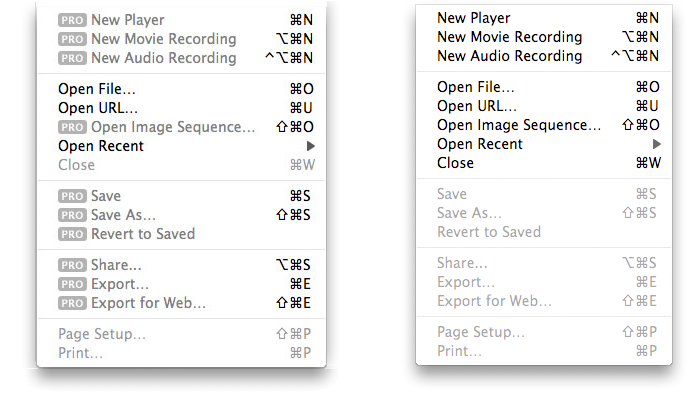
That's just one of several Snow Leopard-related tidbits to crop up in recent weeks after the Cupertino-based Mac maker equipped its developer community with the first pre-release builds of the next-generation OS since early December.
Removal of Pro licensing
Apple has distributed the QuickTime multimedia framework with a limited version of QuickTime Player for so long that the original reason for adding the optional Pro version has almost been lost to history. QuickTime Pro unlocks advanced recording, sharing, saving and exporting functions after users buy a Pro license key, which the company sells for $29.95 and also bundles with some of its Pro software titles.
The QuickTime Pro licensing system appears due to change. A person familiar with the latest distributions of Snow Leopard told MacRumors earlier this week that the software arrived with a version of Player that unlocks all QuickTime Pro's existing features by default.
A few years ago Apple began highlighting Pro features as grayed-out menu items in the Player software to entice users to upgrade. Those options would become immediately available once the user registered QuickTime by entering a Pro license into the QuickTime preference pane.
Though the accessibility of Pro features in the Snow Leopard builds could simply be a measured aimed at affording developers access to test the new version of QuickTime broadly, it was also reported that QuickTime system preference panel has been updated to completely omit the registration pane — a sign that the change may be permanent.
In recent years, Apple has loosened its grip on some legacy QuickTime Pro features while debuting others. In early 2007, the company added a new feature to the paid software that allowed users to export video on their computers in a format suitable for its then fledgling Apple TV media hub. A few months later it unlocked full-screen playback, a feature once exclusive to the Pro software.
QuickTime Player 7.5 basic (left) compared to an unlocked Pro version (right).
Apple is shedding its need to directly monetize QuickTime as it builds products and software that earn revenue for the company using QuickTime as a catalyst technology. Back when Apple was only selling Macintosh computers and spending a lot of money developing software to differentiate its systems from generic PCs, the need to find a way to directly earn revenue from its system software was more critical.
Many attempts to monetize QuickTime
Shortly after the initial development of QuickTime 1.0 in 1991, Apple attempted to bring in money to cover its development by packaging the technology into a $149 Pro version of its Mac System 7 operating system software in 1993. That plan failed miserably, not just because Mac users of the day were accustomed to getting System Software updates from Apple for free, but also because QuickTime and the equally new AppleScript were bundled with the bloated, complex, and system taxing PowerTalk, a collaboration software framework built upon AppleTalk.
QuickTime 2.0, released in 1994, was the only version to be released as a paid-only upgrade. It was also the first version offered for Windows. By version 2.1, Apple was back to offering QuickTime for free, largely to spur rapid cross platform adoption as it fought with Microsoft to deliver the best video playback platform.
QuickTime languished within the struggling Apple during its dark period of the mid-90s. Apple had brought a suit against Microsoft related to code theft that had used the San Francisco Canyon Company to take Apple's technology and install it as part of Microsoft's Video for Windows.
Meanwhile, Microsoft met with Apple's new executives from NeXT and threatened in 1997 to destroy Apple's entire creative multimedia business if it didn't agree to "knife the baby" and drop video playback on the Windows platform, according to testimony given during in the Microsoft monopoly trial.
Steve Jobs brokered a deal with Microsoft that dropped the QuickTime code theft case in exchange for a visible partnership that made Microsoft an investor in Apple and ensured regular new releases of Office for Mac.
Apple also released QuickTime 3.0 in 1998 with a new business model: the software itself would be free, but a special Pro version could be unlocked for $30. The Pro version only enabled certain features of the MoviePlayer application, not the core software itself, making the restriction easy to bypass.
As QuickTime 4, 5 and 6 were released in rapid succession in 1999, 2001, and 2002, the business model behind QuickTime changed from one where Apple was trying to sell foundational operating system technology to consumers to one where the company began using QuickTime itself to develop and support real applications. For example, iTunes relies upon QuickTime for all its underlying media handling needs. Apple's Pro Apps, particularly Final Cut, and its iLife consumer suite are also built on QuickTime.
In 2005, Apple released QuickTime 7, an entirely new architecture that focused the company on MPEG-4 H.264 as a video codec, making it simpler to manage video across devices from iPods to desktops and future devices such as Apple TV and the iPhone. With QuickTime now embedded throughout Apple's products, the demand for earning money from the core software itself is no longer there, enabling the company to enhance users' experience by dropping the legacy Pro licensing fee.
Apple's inability to successfully license QuickTime as a raw software technology to the broad consumer market helps to explain why the company also makes no effort to sell Mac OS X to other hardware makers or as a retail product, and instead bundles its software with hardware sales.



 William Gallagher
 Chip Loder
 Andrew Orr
 Marko Zivkovic
 David Schloss

 Malcolm Owen